
One Stop Solution for Office Furniture Supply
What Are China's Top 10 Exterior Plywood Suppliers?
Choosing an Exterior Plywood supplier in China involves more than comparing quoted prices. Product performance depends on the veneer, adhesive, panel construction, and quality controls behind each order. A sheet may look smooth under warehouse lights, yet show uneven thickness or edge gaps after cutting. Small details matter.
This guide introduces ten suppliers for buyers to research, not as a universal ranking. It considers practical indicators such as product range, manufacturing capabilities, export experience, documentation, and responsiveness to technical questions. These points can help narrow a shortlist, but they do not replace independent checks. Ask for current product specifications, test reports, sample panels, and clear information about intended use. For exterior projects, confirm the panel’s exposure rating and installation requirements rather than relying on the word “waterproof” alone.
Supplier information can change. Product lines, production capacity, certifications, and lead times may differ by factory, order size, or destination market. That part is easy to overlook. A strong introduction is useful, but a careful buyer still verifies claims directly and compares like-for-like grades. Review the panel edges, face quality, and packaging, then clarify tolerances and after-sales support before placing an order. No list can make every project decision for you. Use the profiles as a starting point, and treat unanswered questions as a reason to investigate further.
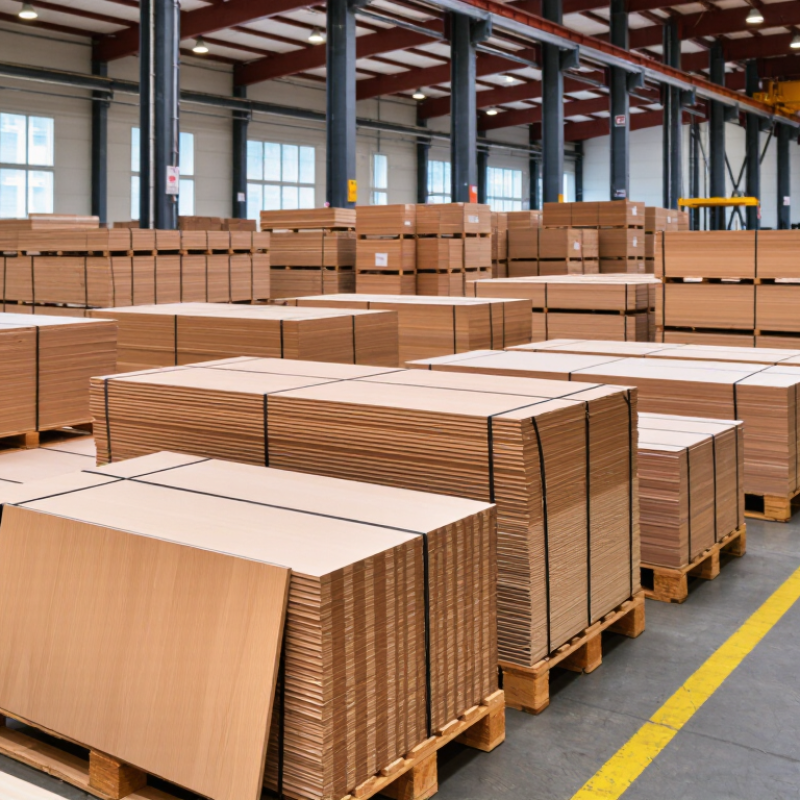
What Exterior Plywood Is and How It Is Classified
Exterior plywood is designed for damp conditions, but “exterior” does not mean permanently waterproof. Classification describes intended moisture exposure and bonding performance. Under EN 636, plywood is grouped for dry, humid, or exterior conditions; EN 314-2 separately rates bond quality. For buyers, these are different checks. A strong bond alone does not guarantee a suitable face, edge, or finish for prolonged outdoor exposure.
The USDA Forest Products Laboratory’s Wood Handbook (FPL-GTR-282, 2021) reports typical solid-wood shrinkage of 3–6% radially and 6–12% tangentially from green to oven-dry. These figures are not plywood ratings, but they help explain why repeated wetting and drying can stress panels. Cross-laminated veneers limit movement, yet exposed edges can still absorb water. Check the product’s declared use, veneer condition, thickness, and whether the intended installation protects cut edges.
Not all exterior panels serve the same job. Structural grades are assessed for load-bearing use, while appearance grades focus more on face quality; a smooth face does not prove structural capacity. Classification systems and grade names can also differ by market. A label alone is not enough. Ask for the applicable standard and technical datasheet, then match the panel to its exposure and support spacing. Some details are easy to overlook.
What Are China's Top 10 Exterior Plywood Suppliers? - What Exterior Plywood Is and How It Is Classified
The table below is a practical sourcing guide, not a ranked list of companies. Exterior plywood generally uses bonding intended to withstand exposure to moisture; this does not mean every panel is waterproof or suitable for permanent immersion. Confirm the applicable standard and intended use with the supplier.
| No. | Supplier capability / product category | Typical panel characteristics | Common applications | What to verify when sourcing |
|---|---|---|---|---|
| 1 | Structural exterior plywood | Designed for structural use; performance depends on the declared grade, veneer quality, bond class, and panel construction. | Building sheathing and other specified structural applications. | Applicable structural standard, declared grade, thickness, span rating or design data, and test reports. |
| 2 | Exterior-grade sheathing supplier | Panels specified for sheathing, with face appearance typically secondary to performance and installation requirements. | Walls, roofs, and floors where the project specification permits plywood sheathing. | Panel grade, edge details, thickness tolerances, exposure limitations, and required installation instructions. |
| 3 | Marine-plywood specialist | Typically made to tighter veneer and bond requirements than general-purpose panels; “marine” does not automatically mean suitable for permanent submersion. | Boatbuilding and demanding moisture-exposed work when the specified panel is appropriate. | The exact marine standard or specification, veneer defects and core void limits, adhesive-bond evidence, and finishing requirements. |
| 4 | Film-faced formwork-panel supplier | Plywood faced with a resin-impregnated film to provide a smoother concrete-contact surface; re-use depends on construction and handling. | Concrete formwork and shuttering. | Film type and weight, edge sealing, panel thickness, bond quality, and stated re-use conditions. |
| 5 | Exterior decorative-panel supplier | Combines a specified plywood base with a decorative face veneer; the face finish and the panel’s exposure rating are separate considerations. | Protected exterior joinery, soffits, and other uses allowed by the panel specification. | Face-veneer species and grade, finish system, edge protection, and whether the complete panel is rated for the intended exposure. |
| 6 | Exterior plywood with a poplar core | A lightweight panel option; properties vary with veneer quality, lay-up, density, and manufacturing controls. | Applications where weight and the specified panel performance are suitable. | Core composition, veneer orientation, density, bond class, thickness, and relevant mechanical test results. |
| 7 | Exterior plywood with a hardwood core | Uses hardwood veneers in some or all core layers; strength, weight, and durability depend on the species and panel construction. | General construction, fit-out, or fabrication where the product grade matches the design. | Declared species or species mix, core lay-up, void limits, emissions documentation, and grade consistency. |
| 8 | Exterior plywood with a mixed-species core | May combine different wood species across veneers; the species mix and construction should be stated in the product specification. | Projects where the documented performance and appearance meet the requirements. | Species disclosure, face and back grades, core quality, bond classification, and batch-to-batch controls. |
| 9 | Cut-to-size exterior-panel supplier | Supplies panels cut to project dimensions; machining does not change the underlying panel’s grade or exposure rating. | Prefabrication, cabinetry, and construction projects requiring finished dimensions. | Dimensional tolerances, cut-edge sealing, packaging, traceability, and protection from moisture during transport and storage. |
| 10 | Certified and export-documentation supplier | Provides product and shipment documentation appropriate to the destination market; certification claims apply only within their stated scope. | Projects requiring verified compliance, chain-of-custody documentation, or export paperwork. | Current certificates and scope, test reports, emissions requirements, origin documents, and consistency between documents and shipped goods. |
Classification note: plywood may be classified by intended use (structural or non-structural), exposure or bonding class, face-and-back grade, thickness, and construction. Standards differ by market; request the precise standard and product documentation rather than relying on terms such as “exterior,” “water-resistant,” or “marine” alone.