
10 Tips for Buying Eco Series Mugs Wholesale
Eco Series Mugs are moving from niche promotional products into serious workplace, hospitality, and retail procurement. Buyers now expect attractive design, reliable performance, and evidence behind environmental claims. The OECD’s Global Plastics Outlook projects that global plastic waste could nearly triple by 2060 without stronger intervention. That pressure is changing how importers compare ceramic, stainless steel, glass, bamboo-fiber, and recycled-content mugs.
The opportunity is real. So is the confusion. The Ellen MacArthur Foundation notes that reusable packaging needs sufficient repeat use to offset manufacturing and washing impacts. A reusable mug used twice is not automatically sustainable. It needs durable construction, practical cleaning, safe materials, and a return or reuse habit. Small details matter: a lid that leaks in a delivery van, a handle that cracks after repeated washing, or a print that fades after ten cycles can damage both costs and credibility.
This guide, “10 Tips for Buying Eco Series Mugs Wholesale,” focuses on decisions that procurement teams can verify. It covers supplier qualification, material documentation, food-contact compliance, packaging reduction, sampling, customization, minimum order quantities, and lifecycle value. Reports from the OECD, UNEP, and the Ellen MacArthur Foundation provide useful context, but reports cannot replace product testing. That is the uncomfortable part. A polished sustainability statement may still hide weak evidence. Buyers should request test reports, factory details, care instructions, and clear certification numbers before placing a large order. Eco claims need proof. The cheapest quote may become expensive waste.
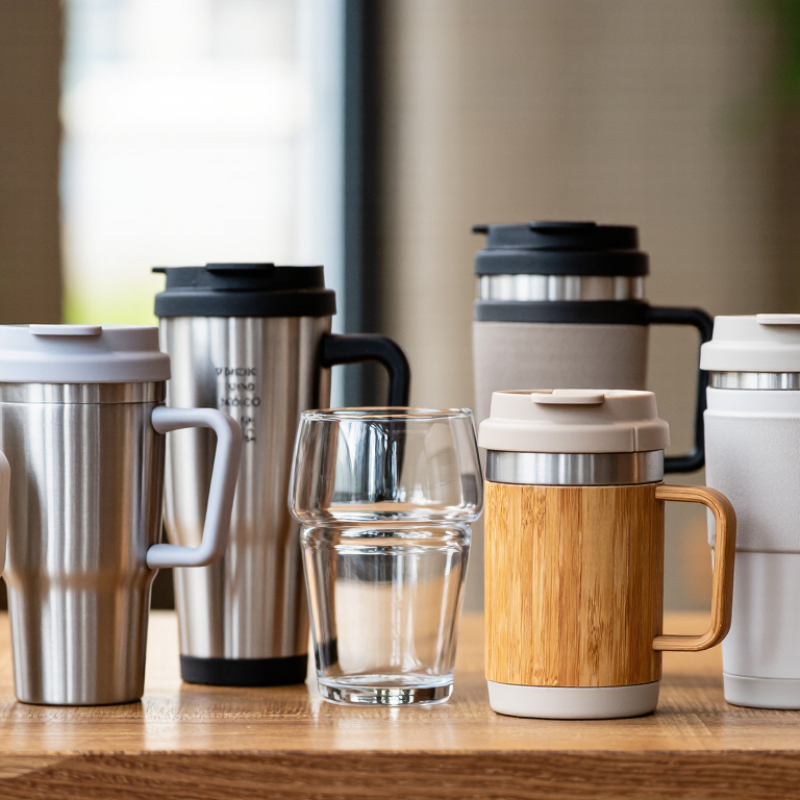
Define Your Wholesale Needs and Target Customer Profile
Before ordering eco series mugs wholesale, define the buyer, use case, and realistic volume. A café needs durable mugs for daily washing. A corporate gift distributor may prioritize packaging, colors, and logo space. A small lifestyle shop may prefer limited cartons and varied designs. Write down monthly demand, target price, capacity, handle style, and acceptable breakage rates. Do not guess your customer profile. Interview five to ten buyers and review past sales. My early mistake was choosing attractive colors before checking shelf space.
Sustainability can support demand, but it should not replace product research. PwC’s 2024 Voice of the Consumer Survey reported that consumers would pay an average 9.7% premium for sustainably produced goods. McKinsey’s 2023 sustainability research also found that packaging recyclability influences purchasing decisions across many categories. Treat these figures as signals, not promises. Your target customers may value recycled content, plastic-free packing, or long service life differently. Ask which claim they can understand quickly. Verify material documentation, food-contact compliance, supplier audits, and production consistency. Then request samples and test them through repeated washing, stacking, and shipping. Some eco materials disappoint under pressure. That needs honest evaluation.
Evaluate Eco-Friendly Mug Materials, Designs, and Product Certifications
Wholesale buyers should assess materials before comparing unit prices. Tip 1: Request the exact composition, not vague “green” wording. Ceramic offers a familiar feel, but glaze safety requires lead and cadmium testing. Tip 2: Check stainless steel grades, wall thickness, and insulation performance. Tip 3: Treat bamboo-plastic composites carefully. They may contain resin and may not be home-compostable. Material claims need evidence.
The 2022 IBM Institute for Business Value consumer study found that 49% of respondents paid more for sustainable products.
That interest can support premium pricing, but buyers still need proof. Tip 4: Ask for recycled-content documentation. Tip 5: Verify food-contact test reports from an independent laboratory.
Tip 6: Match certifications to the claim. Recycled-content certification supports recycled input claims; forestry certification applies to responsibly sourced fiber components. They are not interchangeable. Tip 7: Inspect samples under real use. Check rim smoothness, handle strength, odor, staining, and lid leakage. Small flaws become expensive returns.
Design affects environmental performance too. Tip 8: Prefer durable shapes with replaceable or recyclable parts. Tip 9: Avoid oversized packaging and request packaging weight data. The United Nations Environment Programme’s 2023 report states that plastic pollution could fall by 80% by 2040 through reuse, redesign, and better recycling systems.
Tip 10: Request a written care guide. Dishwasher claims should reflect tested cycles, not assumptions. No material wins every test. Even experienced buyers can mistake an attractive certificate logo for full product verification. Check the certificate holder, scope, expiry date, and tested product model.
Compare Suppliers, Minimum Orders, Pricing, and Customization Options
Buying eco series mugs wholesale requires more than choosing the lowest quote. Compare at least three suppliers using the same specification sheet. Record mug capacity, material composition, wall thickness, packaging, lead time, and payment terms. Ask for recent test reports and clear evidence supporting recycled or renewable content claims. Vague answers deserve caution. Samples matter. Examine the rim, handle joint, glaze, and base after washing. I once approved a sample too quickly and missed a loose handle.
Minimum order quantities can change the real cost. A supplier may offer a low unit price but require 5,000 pieces. Another may accept 500 pieces with a slightly higher price. Calculate product, decoration, mold, packaging, freight, inspection, and storage costs together. Request price breaks at several quantities, such as 500, 1,000, and 3,000 units. Confirm whether replacements are included for damaged items. Ask about production capacity during busy seasons. Small details matter.
Customization needs careful control. Confirm logo size, print method, color references, artwork format, and sample approval fees. Request a decorated sample before mass production. Check whether custom colors increase the minimum order. Some suppliers charge separately for packaging inserts or individual boxes. Keep every promise in a written quotation. A spreadsheet helps, but it cannot replace direct communication. Allow extra time for revisions, because “almost correct” artwork can still create costly waste. Review environmental claims, quality records, and delivery performance before committing to a larger order.
Inspect Product Quality, Packaging, Safety Standards, and Sustainability Claims
Buying Eco Series Mugs Wholesale: Inspect Product Quality, Packaging, Safety Standards, and Sustainability Claims
A low price means little if the first shipment fails inspection. Request production samples, then check the full batch for cracks, pinholes, uneven rims, odors, and loose handles. Test several mugs with hot water and repeated washing. Small defects often appear after heat exposure. I have seen attractive samples conceal inconsistent glazing in bulk orders. Measure capacity and weight across random cartons, not just one sample. Ask for evidence.
Packaging deserves equal attention. The OECD’s Global Plastics Outlook reports that packaging creates about 40% of global plastic waste. Choose packaging with recycled content, minimal layers, and clear material markings. Check whether dividers protect handles without excessive foam. Drop-test packed cartons at warehouse level, because damaged goods create hidden waste and replacement costs. A neat box is not automatically sustainable.
Safety documents should match the exact mug material, coating, and intended use. Request recent food-contact migration tests, heavy-metal results, and factory quality records. Applicable requirements may include EU food-contact rules or United States food-contact provisions. Verify the laboratory, test date, sample code, and production scope. Claims need proof. For recycled or renewable content, ask for mass-balance records or recognized certification. ISO 14021 supports credible self-declared environmental claims, while the GHG Protocol helps structure emissions data. UNEP’s 2023 packaging guidance also warns against vague sustainability language. “Eco-friendly” alone proves little. I still question impressive claims without lifecycle boundaries, disposal instructions, and independent verification.
10 Tips for Buying Eco Series Mugs Wholesale
Use this 10-point verification framework to evaluate product quality, packaging, safety standards, sustainability claims, and supplier documentation before placing a wholesale order.
How to use the chart: Prioritize three checks for product quality, including material consistency, finish, and durability. Confirm packaging protection and labeling, verify food-contact safety documentation, review evidence behind sustainability claims, and obtain complete supplier records before approval. The values represent checklist counts, not market-share or company data.
Confirm Samples, Lead Times, Shipping Terms, and After-Sales Support
Buying Eco Series Mugs Wholesale requires more than checking a recycled-material claim. Request physical samples before approving production. Inspect the glaze, handle strength, lid fit, print quality, and packaging. Ask for material declarations and relevant test reports. ISO 14021 distinguishes self-declared environmental claims from verified information, so vague “green” language deserves questions. A sample can expose uneven coating or a surprisingly thin wall.
Confirm the production lead time in writing. Separate sample approval, manufacturing, inspection, and dispatch dates. Add a buffer for holidays and port congestion. The 2024 UNCTAD Review of Maritime Transport states that ships carry over 80% of global merchandise trade. That scale also brings delays. Ask whether quoted shipping is FOB, CIF, DDP, or another term. Clarify who pays duties, insurance, destination fees, and damage claims. Do not accept “shipping included” without details.
After-sales support should cover defects, shortages, replacement parts, and response times. Request a written claim procedure with photo requirements and resolution deadlines. The World Bank’s 2023 Logistics Performance Index evaluates tracking, timeliness, customs, and logistics competence; use similar questions with suppliers. Keep batch records and carton counts. I would not rely only on a polished sample. Real production may differ. This is an uncomfortable risk, but a pre-shipment inspection can reveal it before hundreds of cartons arrive.
10 Tips for Buying Eco Series Mugs Wholesale - Confirm Samples, Lead Times, Shipping Terms, and After-Sales Support
| No. | Buying Tip | What to Confirm | Practical Benchmark | Evidence to Request | Risk-Control Action |
|---|---|---|---|---|---|
| 1 | Define the material composition | Ask for the exact percentage of ceramic, recycled content, natural fiber, silicone, plastic, or other materials. | The specification should identify all major materials and distinguish recycled content from biodegradable content. | Material specification sheet, supplier declaration, and applicable laboratory test report. | Add the approved composition and tolerance range to the purchase order. |
| 2 | Confirm food-contact safety | Verify that the mug, glaze, coating, lid, and printed decoration are suitable for the intended beverages and temperatures. | Request testing against the food-contact requirements applicable in the destination market. | Recent third-party migration, heavy-metal, or food-contact test reports covering the finished product. | Do not approve production until the reports match the final material and decoration setup. |
| 3 | Order and inspect samples | Check capacity, dimensions, weight, handle strength, lid fit, surface finish, odor, print quality, and packaging. | Compare at least one physical production-equivalent sample with the approved artwork and specification. | Signed sample approval sheet, dated photographs, and a dimensional inspection record. | Keep a sealed reference sample for pre-shipment comparison. |
| 4 | Set a clear quality standard | Define acceptable limits for chips, cracks, pinholes, color variation, scratches, deformation, and packaging damage. | Use an agreed inspection level and defect classification before mass production. | Quality-control checklist, defect photos, inspection procedure, and sampling plan. | Include the defect standard and remedy terms in the sales contract. |
| 5 | Confirm minimum order quantity | Clarify whether the minimum quantity applies per design, color, size, packaging format, or total order. | Request separate quantities for stock items, custom colors, custom molds, and printed designs. | Written quotation showing unit price, tooling cost, setup cost, and quantity breaks. | Calculate demand by sales channel before committing to the lowest unit price. |
| 6 | Lock the production lead time | Confirm sample time, artwork approval time, production time, inspection time, and dispatch date separately. | For customized wholesale orders, a practical planning range is often 30–60 calendar days after approval, depending on materials and quantity. | A milestone schedule with responsible parties and a definition of the production start date. | Allow extra time for port congestion, holidays, testing, and destination customs clearance. |
| 7 | Compare shipping terms | Confirm the Incoterm, named place, freight responsibility, insurance, export documents, and customs obligations. | Compare equivalent quotations under the same Incoterm, currency, shipment weight, and destination. | Pro forma invoice, carton list, freight quotation, commercial invoice, and transport document requirements. | Ask for total landed cost instead of comparing unit prices alone. |
| 8 | Check packaging efficiency | Review inner protection, carton strength, stacking limits, pallet dimensions, and packaging recyclability. | Request carton dimensions, units per carton, gross weight, net weight, and estimated cubic volume. | Packaging drawing, carton drop-test record where relevant, and loading plan. | Approve a packaging sample before production to reduce breakage and dimensional-weight charges. |
| 9 | Verify sustainability claims | Distinguish between recycled, recyclable, reusable, compostable, biodegradable, and plastic-free claims. | Every environmental claim should identify its material basis, test method, conditions, and geographic limitations. | Chain-of-custody records, certification documents, test reports, and approved claim wording. | Use precise wording on packaging and marketing materials; avoid unsupported general claims. |
| 10 | Agree on after-sales support | Clarify the process for shortages, transit damage, manufacturing defects, replacement parts, credits, and response times. | Set a written claim window, required evidence, corrective-action deadline, and replacement or refund procedure. | Warranty terms, claim form, escalation contacts, and examples of corrective-action reports. | Record carton counts and product condition immediately after delivery. |
Planning note: Lead-time and shipping figures are practical procurement benchmarks, not guarantees. Final terms depend on product customization, order volume, destination, season, carrier capacity, and customs requirements.
