How to Choose Chair Furniture for Global Buyers?
Choosing Chair Furniture for global markets is not a simple style exercise. It involves comfort, compliance, logistics, durability, and long-term value. Industry data supports this wider view. CSIL’s World Furniture Outlook 2024 places worldwide furniture consumption above US$1 trillion annually. Grand View Research also forecasts continued growth in the global office furniture market. Hybrid work and redesigned workplaces are important drivers. These trends create opportunity, but they also punish careless specification. A chair may look elegant in a showroom yet feel narrow after eight hours. That detail matters.
Global buyers should compare seat height, depth, back support, load capacity, and adjustment ranges. A 45-centimeter seat may suit one market but challenge taller users elsewhere. Product dimensions need clear technical drawings. Materials deserve equal attention. Leather, recycled polyester, molded foam, and solid wood perform differently under heat, moisture, and frequent cleaning. For commercial seating, buyers should request test evidence aligned with standards such as ANSI/BIFMA X5.1 and ISO 7173. These references help evaluate strength, stability, and durability. They do not replace local compliance checks.
Sustainability claims require careful verification. FSC certification, recycled-content documentation, and transparent factory records are stronger than vague “green” labels. Packaging should protect chair legs and upholstery without creating excessive waste. Freight volume can quietly damage the landed-cost calculation. A low unit price may still be the wrong choice. No single report can predict every user’s experience. Buyers should order samples, conduct practical trials, and record honest feedback before placing volume orders. That reflection is sometimes inconvenient. It is also where reliable sourcing begins.
Classify Chair Furniture by Use, Region, and 2024 Global Trade Data
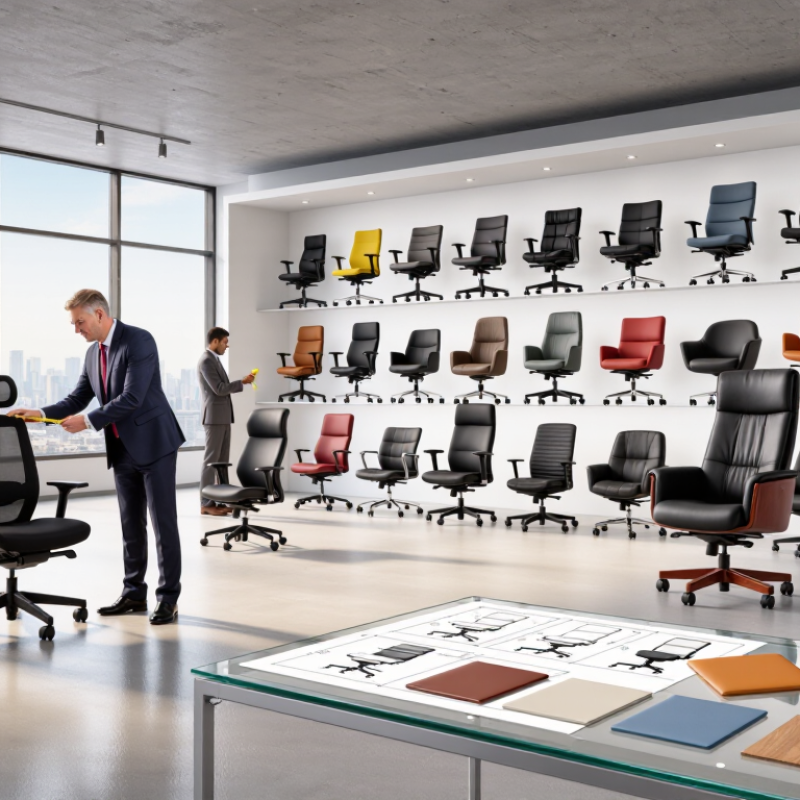
For global buyers, chair furniture should be classified by use before appearance. Dining chairs require stable frames, wipe-clean surfaces, and comfortable seat heights. Office chairs need adjustable support, durable casters, and long-hour testing. Outdoor chairs require moisture resistance, UV stability, and drainage details. Hospitality seating faces heavier turnover, so joints and upholstery deserve closer inspection. I once underestimated packaging strength; a beautiful chair still failed when cartons arrived compressed.
Regional demand changes the specification. In Europe, compact dining and ergonomic office seating often suit smaller rooms and strict documentation needs. North American buyers commonly request wider dimensions, stronger recline functions, and larger packaging units. In Asia-Pacific, space-saving chairs and lightweight materials remain practical for apartments and fast-moving projects. These patterns are useful, but not universal.
Trade data adds a sharper filter. ITC Trade Map and UN Comtrade classify chairs mainly under HS 9401, covering seats and parts. Their 2024 records show China remained a leading exporter by reported value, while Germany, Italy, Poland, and Vietnam were also significant suppliers. The data measures customs value, not comfort or defect rates. That limitation matters. Compare import growth, freight costs, duty treatment, and supplier lead times by destination. For each region, request test reports, carton dimensions, replacement-part policies, and a sample used under realistic conditions. A low unit price can hide expensive returns.
Measure Fit with 95th-Percentile Anthropometrics and 8-Hour Use Criteria
Global buyers should measure chair fit before comparing finishes or prices. A useful reference is 95th-percentile anthropometric data, representing larger users within a target population. Seat width should allow relaxed movement without trapping the hips. Check seat depth against thigh length, leaving two to three fingers behind the knee. Measure twice.
Backrest height, armrest spacing, and chair load ratings also need review. A 95th-percentile user may require wider arms and stronger structural support. However, this figure does not fit everyone. Smaller users can still face pressure points or poor foot contact. Adjustable seat height and a sliding seat pan improve the fit across mixed workforces.
An eight-hour evaluation should examine more than initial comfort. Test the chair with typing, reading, turning, and short breaks. After several hours, inspect lumbar support, seat-edge pressure, heat buildup, and posture changes. A breathable cover may reduce heat, but it cannot fix an incorrect seat angle. Keep adjustment controls reachable and easy to understand. In practical workplace trials, users often ignore complex mechanisms. That is a design warning.
Record each tester’s height, hip breadth, thigh length, and sitting duration. Use the results with regional data, accessibility needs, and local product requirements. Human bodies vary. The measurement model may need revision.
Test Strength Against BIFMA X5.1 and EN 12520 Load Requirements
When choosing chair furniture for global buyers, test strength against both BIFMA X5.1 and EN 12520. These standards measure different risks. BIFMA X5.1 includes repeated-use and static-load procedures for office seating. Some seat tests apply about 2,250 N, while proof-load procedures can be higher. EN 12520 commonly uses a 2,000 N seat load, plus separate backrest and armrest tests. Always verify the current edition and chair category. Requirements can change with product classification.
Laboratory preparation should copy real use. Load the seat at its weakest area, not only at the center. Check welds, fasteners, casters, tilt mechanisms, and plastic joints after testing. A 2023 U.S. Bureau of Labor Statistics release recorded hundreds of thousands of days-away-from-work cases involving musculoskeletal disorders. That figure does not prove a chair caused each injury. It does show why stable support deserves engineering attention. Comfort alone is not strength.
We once treated a pass result as a guarantee. That was too simple. In practice, humidity, uneven floors, transport damage, and heavier users can reduce safety margins. Record load, duration, cycles, deformation, and failure location in each report. Independent laboratories improve credibility, but internal samples still need review. A chair that survives one test may fail after poor assembly. Small details matter.
How to Choose Chair Furniture for Global Buyers? - Test Strength Against BIFMA X5.1 and EN 12520 Load Requirements
| Evaluation Dimension | BIFMA X5.1 Reference | EN 12520 Reference | What the Buyer Should Check | Practical Selection Guidance |
|---|---|---|---|---|
| Standard application | Office and institutional seating, including task and visitor chairs. | Domestic-use seating, such as dining, lounge, and general household chairs. | Confirm that the selected standard matches the intended environment and use frequency. | For offices or public spaces, prioritize an office-seating test report. For household products, request an EN 12520 report or an equivalent applicable standard. |
| Seat static strength | A commonly cited BIFMA X5.1 seat static test applies approximately 2,250 N, equivalent to about 229 kgf, for the specified test duration and setup. | The applicable seat-load value depends on the current EN 12520 edition, chair category, and test configuration; a commonly used reference in domestic seating testing is approximately 2,000 N. | Ask for the exact applied force in newtons, loading position, duration, and whether permanent deformation or breakage occurred. | Do not convert a laboratory test force directly into a guaranteed user-weight rating. A product capacity should be stated separately and conservatively. |
| Backrest strength | Backrest loading is tested using defined horizontal forces, loading points, and cycles specified by the applicable BIFMA X5.1 procedure. | Backrest static and durability tests use specified forces and loading locations that vary with the chair type and edition of the standard. | Check whether the report covers the back frame, recline mechanism, attachment points, and locking functions. | For reclining or rocking chairs, request additional mechanism and repeated-load evidence rather than relying only on a seat static result. |
| Durability testing | BIFMA office-chair procedures include repeated seat, back, and component loading; the required cycles and loads depend on the specific test method and chair design. | EN 12520 domestic seating commonly includes repeated seat-and-back durability testing, with the applicable cycle count determined by the standard edition and product category. | Verify cycle count, test load, sequence, inspection intervals, and pass/fail criteria. | Choose a report that tests the complete assembled chair, not only individual materials or isolated components. |
| Base and leg stability | Office-chair evaluation may include base, caster, stability, and component-strength tests relevant to the chair construction. | Domestic seating evaluation includes stability and strength checks for legs, frames, arms, and other structural parts where applicable. | Inspect welds, fasteners, leg geometry, caster attachment, anti-tip behavior, and floor-contact points. | For heavier users or high-traffic areas, select a wider structural base and require a full stability report for the assembled product. |
| Armrest performance | Armrest strength and attachment tests may be required when armrests are included in the chair design. | Common domestic-seating references include approximately 700 N vertical armrest loading and approximately 350 N horizontal armrest loading, subject to the applicable test method. | Confirm the force direction, loading location, armrest height, and whether the armrest is integral or adjustable. | Avoid using armrests as steps or lifting handles unless the product has been specifically designed and tested for that purpose. |
| User-weight specification | The standard test load is a laboratory requirement and is not automatically the same as the permitted user weight. | The standard does not provide one universal user-weight rating for every chair design. | Request a clearly documented maximum recommended user mass in kilograms and pounds. | Use the lower of the supplier’s stated capacity, project requirement, and any applicable local safety requirement. |
| Documentation quality | The report should identify the BIFMA X5.1 edition, test methods, sample description, loads, cycles, and results. | The report should identify the EN 12520 edition, product category, test sequence, loads, cycles, and pass/fail results. | Check product model, dimensions, materials, revisions, laboratory details, and report date. | Reject certificates that only say “tested to standard” without showing the actual test scope and results. |
| Recommended buying decision | Best suited to office, commercial, and institutional procurement when the complete chair passes the relevant office-seating tests. | Best suited to household and domestic-use procurement when the complete chair passes the relevant domestic-seating tests. | Match the standard, load profile, durability level, environment, and declared user capacity to the project. | For international projects, request both applicable test evidence and a written product specification covering load, use environment, warranty conditions, and replacement parts. |
Note: BIFMA X5.1 and EN 12520 are test standards rather than universal user-weight labels. Exact forces, cycle counts, and acceptance criteria must be confirmed against the current edition, product category, and complete laboratory test report.
Audit Materials via FSC, REACH, OEKO-TEX, and Fire-Safety Standards
How to Choose Chair Furniture for Global Buyers?
Material audits should begin with traceability, not attractive samples. FSC documentation can verify responsible forest materials and chain of custody. It does not certify foam, fabric, glue, or the complete chair. The FAO Global Forest Resources Assessment 2020 reports that forests covered about 4.06 billion hectares worldwide. Responsible sourcing still requires current certificates, supplier scopes, and invoice checks.
REACH compliance requires reviewing restricted substances, chemical declarations, and updated supplier information. OEKO-TEX testing can support textile safety, but buyers should confirm the exact product class and certificate validity. A fabric certificate may not cover dye, coating, thread, or finished upholstery. Small gaps matter. Ask for laboratory reports tied to the production batch. ECHA’s 2023 chemical data shows the scale of regulatory registration, with more than 23,000 substances registered under REACH. Paperwork alone is not proof of safe production.
Fire safety needs destination-specific testing. Upholstered furniture contributed to about 14,700 home structure fires annually in the United States during 2015–2019, according to the National Fire Protection Association. Request test reports for the complete seat assembly, including foam, fabric, barrier layers, and stitching. EN 1021 and California TB 117-2013 address different requirements and cannot be treated as interchangeable. During audits, inspect labels, batch records, and production samples. A certificate can expire. A factory can also change materials without warning. That uncomfortable possibility deserves a documented recheck.
How to Choose Chair Furniture for Global Buyers?
Audit Materials via FSC, REACH, OEKO-TEX, and Fire-Safety Standards
How to read the chart: FSC Chain of Custody is used to verify responsibly sourced wood and traceability. EU REACH addresses restricted chemicals in articles and materials. OEKO-TEX STANDARD 100 focuses on harmful substances in tested textile components. EN 1021-1 and EN 1021-2 assess the ignition resistance of upholstered furniture using a cigarette and a match flame, respectively. Buyers should request documents that match the actual chair components and the destination market.
Estimate Landed Cost from CBM, MOQ, HS Codes, and Tariff Data
For global chair buyers, landed cost starts with accurate carton measurements. Measure length, width, and height after final packing. Then calculate CBM as length × width × height in meters. Measure every carton. A small error across 300 cartons can change the freight bill significantly. UNCTAD’s Review of Maritime Transport reports that over 80% of global merchandise trade moves by sea, making volume planning essential for furniture imports.
MOQ changes the cost per chair. Divide total purchasing, inland transport, ocean freight, insurance, duty, port, and brokerage costs by the sellable quantity. A low unit price may become expensive when the order leaves unused container space. Compare the supplier’s MOQ with realistic monthly demand. Do not assume full containers are always cheaper.
HS classification needs careful review. Many chairs fall under Chapter 94, but materials, mechanisms, and intended use can affect the final subheading. The World Customs Organization’s Harmonized System provides the international structure, while the WTO World Tariff Profiles reports tariff information by economy and product category. HS codes are not tariff rates. Confirm the code with the destination customs authority or a qualified broker. Duty usually follows customs value, but valuation rules differ between countries. VAT, handling fees, and import processing charges may be separate. Build low, expected, and high-cost scenarios. Tariffs change. Keep evidence. A neat spreadsheet can still be wrong when carton data, origin documents, or fuel surcharges are outdated.
Related Posts
-
Exploring the Future of Business Chairs at the 138th Canton Fair 2025 in China
-

“Securing Your Office: How to Navigate Import Certification for the Best Business Chairs”
-
Unlocking Productivity: The Advantages of Innovative Office Furniture Design
-

Solutions for Elevating Your Office Aesthetic with Best Executive Office Seating
-
Navigating the Future of Comfort How to Choose the Best Ergonomic Chair in 2025
-
What Is an Office Table and What Types Are Available?