
One Stop Solution for Office Furniture Supply
10 Tips for Choosing the Best Embossed Fabric?
Choosing the right Embossed Fabric involves more than admiring a raised pattern under showroom lights. The surface may look luxurious, yet its performance depends on fiber content, embossing depth, backing structure, and finishing methods. A fabric that feels soft on a sample card can flatten quickly on upholstery or develop shine after repeated handling. I have seen this mistake happen when buyers judge texture without testing durability.
Practical selection begins with the intended use. Curtains, cushions, apparel, and hospitality seating need different levels of abrasion resistance, flexibility, and color stability. Ask suppliers for technical data, care instructions, and test samples from the actual production batch. Check the reverse side, edge stability, and pattern alignment. Small details matter. Independent testing can also verify claims about composition, colorfastness, and performance. Reliable suppliers should explain their process clearly rather than rely on attractive photographs or vague quality promises.
These ten tips will help compare Embossed Fabric with greater confidence. They cover visual appeal, tactile comfort, maintenance, environmental considerations, and long-term value. Still, no checklist replaces real-world testing. Lighting can mislead. Samples can conceal inconsistency. My own judgment has sometimes changed after washing or rubbing a fabric repeatedly. That is worth remembering. Choose based on evidence, not excitement alone. A careful buyer should balance design ambition with practical limits, supplier transparency, and the fabric’s expected service environment.
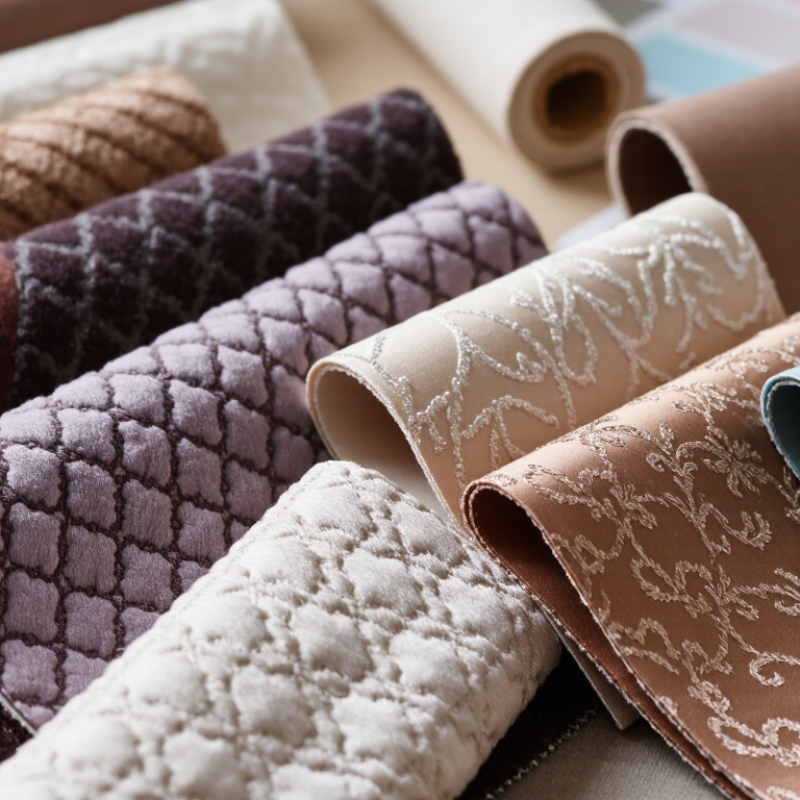
Define the Embossed Fabric’s Intended Use and Performance Needs
Choosing the best embossed fabric starts with its intended use, not its appearance. A raised pattern may look attractive on a showroom sample, yet fail under daily friction. Upholstery for a busy café needs stronger abrasion resistance than decorative cushions. Clothing requires softness, flexibility, and comfortable airflow. Curtains may need stable color and controlled drape.
Write down the fabric’s working conditions. Will it face sunlight, moisture, frequent washing, or sharp edges? Check fiber content, fabric weight, stretch recovery, and surface durability. For furniture, request abrasion results and seam-slippage information. For apparel, test shrinkage after washing and examine whether the embossing flattens. Small samples can reveal important problems.
I once judged a fabric by touch alone. That was a mistake. The surface felt dense, but its backing stretched unevenly during cutting. Test the fabric in a realistic way. Bend it over a cushion, rub it repeatedly, and wash a sample when care instructions allow. Compare the embossed depth before and after testing. Also inspect color consistency across the roll. A reliable supplier should provide clear specifications, care guidance, and test documentation. Performance needs are easy to underestimate when the pattern receives all the attention.
10 Tips for Choosing the Best Embossed Fabric? - Define the Embossed Fabric’s Intended Use and Performance Needs
| Tip | Intended Use | Recommended Fabric Structure | Typical Weight | Key Performance Needs | Suitable Embossing Effect | Testing or Selection Check | Practical Recommendation |
|---|---|---|---|---|---|---|---|
| 1 | Apparel and fashion garments | Knitted polyester, cotton, viscose, or blended fabric | 120–280 g/m² | Soft hand feel, stretch recovery, colorfastness, and comfortable drape | Fine geometric, ribbed, floral, or tone-on-tone patterns | Check elongation, recovery, surface softness, and appearance after washing | Use a shallow embossing depth on stretch fabrics to reduce distortion and cracking |
| 2 | Home décor, curtains, and cushions | Woven polyester, cotton, linen blends, or upholstery fabric | 180–450 g/m² | Dimensional stability, abrasion resistance, lightfastness, and low shrinkage | Deep leather-look, channel, basket, or raised ornamental textures | Review abrasion results, seam slippage, shrinkage, and pattern consistency | Choose a stable woven base when the fabric will receive frequent handling or tension |
| 3 | Bedding, blankets, and mattress covers | Polyester microfiber, cotton, or quilted fabric | 180–350 g/m² | Softness, breathability, wash durability, and resistance to pilling | Low-relief waves, diamonds, dots, or quilted geometric designs | Evaluate pilling, dimensional change, seam strength, and color change after laundering | Avoid excessively deep patterns that may reduce comfort during skin contact |
| 4 | Towels, bathrobes, and spa textiles | Cotton terry, bamboo blend, or absorbent knitted fabric | 350–650 g/m² | Water absorbency, drying rate, colorfastness, and wash resistance | Subtle borders, bands, waffle textures, or small repeated motifs | Check absorbency before and after washing, lint release, and loop stability | Keep embossing moderate so the design does not block the fabric’s absorbent surface |
| 5 | Bags, wallets, and accessories | Coated polyester, nylon, canvas, microfiber, or synthetic leather | 250–700 g/m² | Tear strength, abrasion resistance, shape retention, and stain resistance | Leather grain, pebbled, honeycomb, or branded-free geometric textures | Test flexing, rubbing, coating adhesion, tear strength, and edge fraying | Select a firm backing or laminated construction for structured products |
| 6 | Sportswear and activewear | Polyester-spandex or nylon-spandex knitted fabric | 140–260 g/m² | Moisture management, stretch recovery, breathability, and low snagging | Fine mesh, linear, micro-grid, or directional textures | Measure stretch and recovery, wicking behavior, pilling, and print or finish durability | Use lightweight relief patterns that preserve airflow and garment flexibility |
| 7 | Automotive and transport interiors | Polyester, polyamide, or laminated upholstery fabric | 300–800 g/m² | High abrasion resistance, UV stability, flame performance, and low fogging where required | Fine grain, perforated-look, linear, or technical 3D textures | Verify applicable flammability, abrasion, lightfastness, odor, and dimensional stability requirements | Confirm that embossing does not weaken laminated layers or interfere with seams |
| 8 | Footwear uppers and linings | Mesh, microfiber, synthetic leather, or coated textile | 180–600 g/m² | Flex resistance, tear strength, breathability, abrasion resistance, and bonding compatibility | Micro-perforation, mesh, pebble, or structured technical patterns | Test repeated flexing, adhesion, seam strength, water resistance, and surface cracking | Match the relief depth to the bending zones to prevent premature surface damage |
| 9 | Protective workwear and uniforms | Woven cotton, polyester-cotton, aramid blend, or coated fabric | 180–380 g/m² | Tensile strength, tear resistance, colorfastness, comfort, and required protective performance | Low-profile rib, grid, or functional textured surfaces | Confirm relevant heat, flame, chemical, or high-visibility requirements after embossing | Treat embossing as a secondary design feature; required safety performance comes first |
| 10 | Reusable cleaning cloths and household wipes | Polyester microfiber, nonwoven fabric, or cotton blend | 180–400 g/m² | Liquid absorption, particle capture, low linting, wash durability, and quick drying | Waffle, honeycomb, raised stripe, or dual-sided cleaning textures | Check absorbency, lint release, cleaning efficiency, odor retention, and repeated wash performance | Choose a texture that increases surface area without creating snagging points or hard edges |