
What Is the Best Maple Engineered Flooring?
Choosing the best Maple Engineered Flooring involves more than comparing color, price, and glossy product photographs. A reliable floor must perform under daily pressure, from muddy shoes and rolling chairs to changing indoor humidity. Its visible maple layer, core construction, finish, and installation method all influence long-term results. A beautiful sample may still disappoint if it expands, feels unstable, or shows scratches quickly.
This guide examines Maple Engineered Flooring through practical and technical criteria. We will consider wear-layer thickness, board structure, moisture resistance, finish quality, and compatibility with subfloors and underfloor heating. Product documentation matters. So does the installer’s experience. A precise moisture reading can prevent problems that no attractive finish can hide. Small details matter.
Realistic testing also helps. Place samples near a window, wipe them repeatedly, and inspect the edges under bright light. Compare walking comfort, color variation, and surface texture. Maple often offers a bright, refined appearance, but its natural grain and pale tones may reveal dents or dirt more clearly than darker species. That is not necessarily a flaw.
There is no universal winner. A premium board may be excessive for a guest room, while a cheaper option may fail in a busy hallway. Even careful comparisons have limits. Personal priorities can change the answer. By weighing verified specifications, maintenance demands, installation conditions, and real household use, readers can choose flooring with greater confidence and fewer expensive surprises.
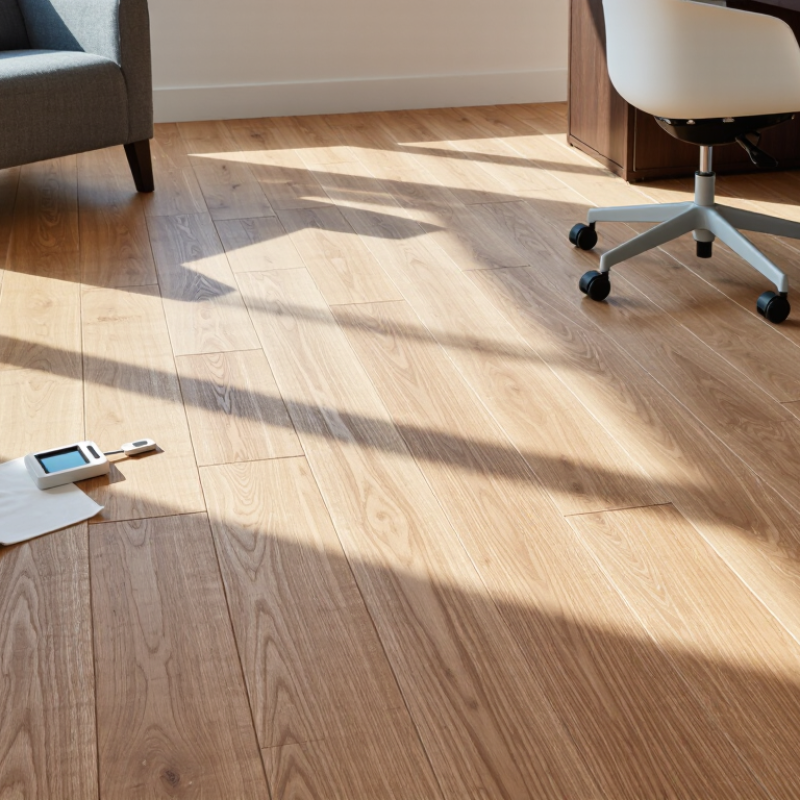
What Is Maple Engineered Flooring?
Maple engineered flooring is real maple wood bonded to a layered core. The surface usually contains a maple veneer. Beneath it, plywood or high-density wood layers improve dimensional stability. This structure helps the floor respond better to seasonal humidity than many solid maple boards. It is not waterproof, however.
The USDA Forest Products Laboratory’s Wood Handbook, FPL-GTR-282 (2021), lists hard maple at approximately 1,450 lbf on the Janka hardness scale. That rating explains its resistance to everyday dents from furniture and foot traffic. Hard, yes. Scratch-proof, no. Sand, grit, and pet claws can still mark the finish.
Installation quality matters as much as the wood species. The National Wood Flooring Association’s installation guidelines emphasize subfloor moisture testing, proper acclimation, and expansion gaps. I would not choose maple flooring from a small sample alone. Maple often appears creamy and quiet under store lighting, then shows stronger grain contrast near a window. That can be beautiful, but it may feel unexpectedly busy. Look for a stable core, a clearly stated wear-layer thickness, and compatible finish specifications. A thicker maple layer may allow future refinishing, although repeated sanding still reduces the board’s life. The best maple engineered flooring depends on room humidity, subfloor condition, traffic, and your tolerance for visible wear.
How Maple Engineered Flooring Is Made
What Is the Best Maple Engineered Flooring?
How Maple Engineered Flooring Is Made
Maple engineered flooring begins with a carefully selected maple wear layer. Manufacturers usually slice or saw the timber into thin boards. Sawn maple keeps more natural texture and produces a stronger, more authentic surface. Rotary cutting can improve yield, but its grain may look less consistent. That difference matters in bright rooms.
The maple layer is bonded to a stable core, often made from cross-grained wood veneers. Each layer runs in a different direction. This structure helps reduce movement when indoor humidity changes. Some floors use a dense fiberboard core instead. It can feel firm underfoot, although its moisture tolerance depends on its exact composition and construction.
During production, controlled pressure and suitable adhesive create a tight bond. The panels are then pressed, trimmed, and milled with precise tongue-and-groove or click profiles. A factory finish may include several protective coats cured under controlled conditions. Quality checks measure thickness, surface wear, moisture content, and joint accuracy. I have found that small milling errors can become obvious beside long walls. Installation conditions still matter. Even excellent flooring can fail over a damp subfloor or with poor acclimation. No maple floor is flawless. A premium appearance involves trade-offs between grain character, hardness, repairability, and price. Before choosing, inspect a full sample in natural daylight, not only a small showroom piece.
Key Factors for Comparing Maple Flooring Options
What Is the Best Maple Engineered Flooring?
Key Factors for Comparing Maple Flooring Options
The best maple engineered flooring depends on construction, not appearance alone. Hard maple measures about 1,450 lbf on the Janka hardness scale, according to the USDA Forest Products Laboratory’s Wood Handbook. Soft maple measures closer to 950 lbf. That difference matters in busy hallways, kitchens, and homes with pets. Inspect the wear layer carefully. A thicker maple veneer usually allows more refinishing, but manufacturer specifications must confirm the sanding limit.
Core quality deserves equal attention. Look for multiple cross-laid plies with tight bonding and minimal voids. This structure helps reduce seasonal movement. The National Wood Flooring Association recommends maintaining indoor humidity near 30% to 50%. Poor humidity control can still cause gaps, cupping, or edge swelling. The floor is not independent of the room.
Subfloor preparation is often overlooked. It should be clean, level, and tested for moisture before installation. Over concrete, moisture readings are essential. Finish type also changes maintenance needs; a durable factory-cured coating usually handles grit better than a fragile surface finish. Grade selection involves compromises. Clear maple offers uniform color, while natural grades reveal mineral streaks and knots. I would not choose purely by showroom lighting. Real samples near windows expose yellowing, grain variation, and unwanted glare. Even expert comparisons can miss this detail.
Best Maple Engineered Flooring Types for Different Spaces
Hard maple engineered flooring suits living rooms and bedrooms where clean lines and moderate traffic matter. Its pale cream tone reflects daylight and makes smaller rooms feel wider. The USDA Forest Products Laboratory’s Wood Handbook explains that engineered wood uses layered construction for better dimensional stability than solid boards. Choose a plywood-core maple floor for a more natural feel underfoot. A 2–4 millimeter wear layer can also support future refinishing, depending on the manufacturer’s instructions.
For kitchens, entryways, and family rooms, select maple with a durable factory finish and a textured surface. Clear-grade maple looks calm, but it can reveal dents and dark marks quickly. Character-grade maple hides daily wear better. Basements need extra caution. Engineered flooring handles seasonal movement better than solid wood, yet it is not waterproof. NWFA installation guidance recommends maintaining indoor humidity between 30% and 50%. That detail is easy to ignore. It should not be.
Tips: Check the subfloor moisture before installation. Use mats near exterior doors. Avoid wet mopping. Ask for finish, core, and wear-layer data, not only color samples. I once preferred the palest maple for a bright hallway, but the scratches became obvious within months. A warmer grade would have been wiser. The 2024 NWFA market report also emphasizes professional installation and maintenance as key factors in long-term flooring performance.
How to Choose and Maintain Maple Engineered Flooring
What Is the Best Maple Engineered Flooring?
The best maple engineered flooring depends on construction, finish, and room conditions. Select boards with a stable plywood core and a clearly measured maple wear layer. The USDA Forest Products Laboratory’s Wood Handbook reports hard maple at approximately 1,450 lbf on the Janka hardness scale. Soft maple is considerably less resistant to dents. That difference matters in kitchens, hallways, and homes with large dogs. A thicker wear layer can support future refinishing, but sanding limits vary by product. Check the technical sheet before buying. The National Wood Flooring Association recommends maintaining indoor humidity between 30% and 50%. Its guidance also commonly places room temperature near 60–80°F. Seasonal control is essential.
Maintenance starts with prevention. Use a soft microfiber mop and vacuum with a floor-safe attachment. Clean spills quickly, especially near sinks and exterior doors. Choose a pH-neutral cleaner approved for finished wood floors. Avoid soaking the surface. Steam cleaners may force moisture into joints and damage the finish. Place felt pads beneath chair legs, and use breathable mats at entrances. Maple can show scratches under strong side lighting.
I still notice marks more quickly than expected. That is easy to forget.
Tips: Keep humidity stable with a simple hygrometer. Wipe muddy footprints before they dry. Rotate rugs occasionally to reduce uneven fading. Ask a flooring professional to inspect dull areas before recoating. A small maintenance mistake can become expensive.
