
Why Are Soft Dolls So Popular Among Global Buyers?
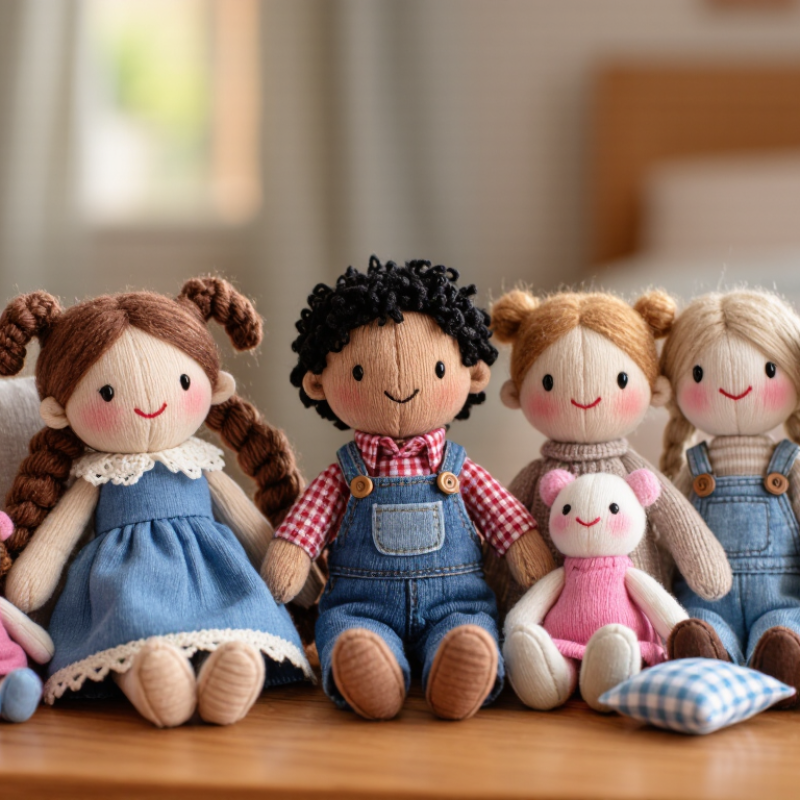
Soft Dolls have moved beyond traditional nursery toys. They now appear in bedrooms, gift shops, travel bags, and online collections worldwide. Their appeal comes from a simple combination: gentle textures, expressive faces, and emotional familiarity. A child may carry one through a busy airport, while an adult buyer may choose one for decoration, comfort, or nostalgia. These small details help explain their cross-border popularity.
Dr. Amanda Gummer, a respected child-development and toy-industry specialist, has said, “Toys should be fun, but they should also support children’s development.” Her observation fits Soft Dolls closely. They can encourage pretend play, storytelling, role practice, and quiet emotional expression. A child might feed a fabric doll, cover it with a tiny blanket, or speak to it after a difficult day. These actions look ordinary, yet they build imagination and social understanding. Parents also notice practical benefits, including lightweight construction, washable fabrics, and soft surfaces.
However, popularity does not mean every Soft Dolls product is equally successful. Some designs feel generic, while others use poor stitching or unclear safety information. Buyers increasingly inspect fabric quality, filling, labels, and supplier reliability before ordering. Cultural preferences also matter. A doll’s clothing, skin tone, hairstyle, and accessories may influence acceptance in different markets. The industry still has room to improve. Comfort can be subjective, and global demand is difficult to measure perfectly. Even so, trusted quality and emotional design remain powerful reasons behind continued buyer interest.
What Defines a Soft Doll?
Why Are Soft Dolls So Popular Among Global Buyers?
A soft doll is more than a toy filled with fabric or fiber. Its defining feature is a gentle, flexible body that feels comfortable in a child’s hands. Common materials include cotton blends, plush textiles, and carefully processed synthetic fibers. The outer fabric should feel smooth, without sharp threads or rough seams. A well-made doll also keeps its shape after light squeezing, hugging, and regular play.
In hands-on product checks, construction often matters more than appearance. Secure stitching helps prevent seams from opening. Firmly attached features reduce avoidable risks for younger users. Buyers should also examine the stuffing, surface finish, cleaning instructions, and age guidance. Softness alone is not enough. That distinction matters. Some dolls feel pleasant but lose their shape quickly. Others look attractive but use uncomfortable fabric. My own judgment would be incomplete without checking durability and care requirements. No definition is perfect.
Tips: Press the doll gently and inspect its recovery. Run your fingers over every seam. Check whether small parts are firmly attached. Choose washable materials when frequent cleaning is expected. Read measurements carefully, because a photo can make a doll appear larger. For international purchases, review material details and safety information from reliable product documentation.
How Soft Dolls Evolved Across Cultures and Markets
Soft dolls have traveled far beyond the nursery. Their evolution reflects changing ideas about comfort, identity, and childhood across cultures. In Japan, small fabric figures often express seasonal stories or imagined companions. In parts of Europe, handmade dolls preserve regional clothing details. In North America, soft dolls increasingly appear as collectible gifts and decorative objects.
Market data confirms their wider appeal. Grand View Research estimated the global plush toys market at about USD 7.5 billion in 2023, with continued growth expected through 2030. Statista Market Insights also forecasts steady expansion in the worldwide dolls and stuffed toys category. E-commerce has accelerated this shift. Buyers can now compare textures, sizes, cultural designs, and safety information across borders. That convenience has changed the product itself. Soft dolls are becoming more personalized, giftable, and display-friendly.
Tips: Sellers should study local preferences before adapting designs. Embroidery, skin tones, clothing, and facial features need respectful research. Clear age guidance and material information build trust. A caution matters here: global popularity does not mean one design fits every market. I may be overestimating nostalgia in some regions, where parents prioritize washable fabrics and educational value. Small details matter. A soft doll’s fabric, stitching, and expression can carry cultural meaning.
Why Are Soft Dolls So Popular Among Global Buyers?
How Soft Dolls Evolved Across Cultures and Markets
Soft dolls have developed from ancient cloth figures and children's play objects into culturally meaningful gifts and collectible products. Their popularity is linked to tactile comfort, imaginative play, handmade appeal, cultural identity, and easy adaptation to local traditions. The timeline below shows selected documented periods in which cloth and soft-doll traditions became visible in different cultures. Dates are approximate historical reference points, not sales figures.
Why Soft Dolls Appeal to Global Buyers
Soft dolls appeal to global buyers because they offer comfort, gentleness, and an easy emotional connection. A child can hold one during travel, bedtime, or a noisy afternoon. Adults also buy them as thoughtful gifts, especially when a doll suggests care without requiring much explanation. The appeal crosses languages. Faces, soft textures, and familiar shapes communicate quickly.
From a product-review perspective, buyers often inspect fabric feel, seam strength, stuffing recovery, and cleaning instructions. A well-made doll should feel soft but not fragile. Secure stitching matters when small hands pull ears, arms, or clothing. Clear age guidance and material information support safer purchasing decisions. Buyers in different climates may also consider drying time, dust collection, and storage space. These practical details turn affection into confidence.
However, emotional appeal can hide weaknesses. A beautiful face cannot compensate for loose threads, harsh fabric, or unclear care guidance. I may be oversimplifying, though. What feels comforting to one buyer may feel ordinary to another. Price, culture, household habits, and sensory preferences all influence the final choice. That makes global demand broad, but never identical. Reliable sellers should describe products honestly and avoid promising that one doll suits everyone.
Perhaps the simplest reason remains the strongest: soft dolls make comfort visible.
Key Factors Shaping Soft Doll Design and Production
Why Are Soft Dolls So Popular Among Global Buyers?
Soft doll design begins with touch, safety, and emotional recognition. Buyers often notice facial expression before fabric quality. A calm smile can make a doll feel comforting, while stitched eyes reduce small-part risks. Designers usually select short-pile fabrics for easier cleaning and consistent color. Cotton blends, plush polyester, and recycled fibers each create different textures. The choice affects softness, durability, drying time, and production cost. In practice, texture testing matters more than a material label.
Production teams must balance appearance with reliable construction. Seams need reinforced stitching, especially around arms, legs, and clothing attachments. Filling should remain evenly distributed after repeated squeezing and washing. A sample may look perfect on a display table. It can still fail during compression tests. That mistake is expensive. Quality checks should examine loose threads, color transfer, odor, and sharp decorative parts. Age guidance and packaging information also need clear, accurate wording for international buyers.
Global demand also shapes size, color, and character choices. Some buyers prefer compact dolls for travel, while others choose larger pieces for room decoration. Cultural preferences can influence hairstyles, clothing details, and facial features. Designers should research these differences without relying on stereotypes. Small production runs help teams test feedback before making thousands of units. The process is not always efficient. Human inspection can miss flaws. Better records, repeat testing, and honest supplier communication make the final product more dependable.
Why Are Soft Dolls So Popular Among Global Buyers? - Key Factors Shaping Soft Doll Design and Production
| Design and Production Dimension | Practical Data or Benchmark | Why It Influences Global Demand | Production Implication |
|---|---|---|---|
| Softness and Tactile Comfort | Common plush constructions use polyester pile fabrics with short, medium, or long fibers. Short-pile fabrics are generally easier to clean and maintain than long-pile fabrics. | A soft hand-feel supports emotional attachment, comfort use, gifting, and repeat purchases across different age groups. | Control fiber length, fabric density, seam pressure, and stuffing distribution during sampling and final inspection. |
| Safety for Young Children | For toys intended for children under 3 years, detachable components must be assessed against small-parts requirements. The ASTM small-parts cylinder is approximately 31.75 mm in diameter and 57.15 mm in length. | Parents and retailers prioritize products that reduce choking, sharp-edge, and detachment risks. | Use embroidered facial features, reinforced seams, secure eyes, and age-appropriate component sizing. |
| Compliance and Testing | Major international toy-safety frameworks include ASTM F963 in the United States, EN 71 in the European market, and ISO 8124 for international guidance. | Clear compliance documentation helps products enter multiple markets and reduces retailer and customs risks. | Plan testing for mechanical and physical properties, flammability, migration of certain elements, and labeling before mass production. |
| Washability and Hygiene | A removable, machine-washable outer cover can simplify care. Care instructions should specify washing temperature, drying method, and whether tumble drying is suitable. | Washable products are attractive for children, frequent-use items, and households concerned about dust and stains. | Validate colorfastness, seam strength, shape recovery, stuffing retention, and label durability after repeated care cycles. |
| Durability and Seam Security | High-stress areas include the neck, arms, legs, ears, clothing attachments, and carry loops. These zones require reinforced stitching and controlled seam allowances. | Longer product life improves perceived value and reduces returns caused by loose filling, open seams, or detached accessories. | Apply pull testing, seam inspection, needle control, and representative-use simulation before shipment. |
| Size and Portability | Compact soft dolls are easier to store, carry, gift-wrap, and ship. Larger dolls require more fabric, stuffing, carton volume, and warehouse space. | Portable formats suit travel, school, nursery, and impulse-gifting occasions while helping control delivery costs. | Optimize finished dimensions, compressed packing recovery, carton utilization, and dimensional-weight exposure. |
| Personalization and Emotional Design | Customizable elements may include hair, clothing, facial expression, accessories, color palettes, and name-related details. | Personalized features increase gift relevance and help buyers select products for birthdays, holidays, and milestones. | Use modular patterns and standardized body components to support variations without redesigning the entire product. |
| Cultural Adaptability | Neutral facial expressions, adaptable clothing, and non-season-specific color options can be used across multiple regions. | Culturally flexible designs reduce localization barriers and make collections suitable for broader international audiences. | Separate universal base designs from region-specific apparel, packaging language, and accessory modules. |
| Material Transparency and Sustainability | Recycled polyester, certified cotton, lower-impact dyes, recycled paper packaging, and reduced plastic components are commonly considered sustainability options. | Buyers increasingly look for understandable material information and packaging that creates less unnecessary waste. | Document fiber composition, supplier certifications, chemical controls, packaging weight, and end-of-life considerations. |
| Color and Visual Recognition | High-contrast facial features and clearly differentiated color areas improve product recognition in online thumbnails and retail displays. | Soft dolls are often selected emotionally, so a recognizable silhouette and face can influence first impressions quickly. | Standardize color references, check colorfastness, and evaluate product appearance under different lighting conditions. |
| Cost and Manufacturing Efficiency | Major cost drivers include fabric consumption, pattern complexity, labor minutes, stuffing volume, accessories, testing, packaging, and shipping volume. | A balanced price-to-quality relationship makes soft dolls accessible to more consumers and supports wider distribution. | Reduce unnecessary pattern pieces, simplify accessory attachment, improve nesting efficiency, and use repeatable quality-control checkpoints. |
Note: The benchmarks above are general design and production references. Final requirements should be confirmed according to the target market, product age grade, materials, and applicable regulations.
How Buyers Choose Soft Dolls for Different Needs
Why Are Soft Dolls So Popular Among Global Buyers?
How Buyers Choose Soft Dolls for Different Needs
Global buyers choose soft dolls for different reasons, not just appearance. Parents often seek gentle materials, secure stitching, and washable surfaces. Collectors may value facial detail, clothing quality, and unusual handmade features. Gift buyers usually focus on age suitability, size, and emotional appeal. Softness matters.
In my experience reviewing soft toys, buyers examine fabric texture before color or decoration. A plush surface should feel smooth, but it should not shed easily. They also check seams around the arms, ears, and clothing. Loose threads can reveal weak construction. For young children, embroidered details are generally more practical than detachable parts. Buyers should also read care instructions carefully. Some dolls lose shape after machine washing, despite attractive product descriptions.
Room size affects the decision too. A small doll fits a travel bag or bedside shelf. A larger doll may offer better comfort during bedtime routines. International buyers also compare measurements, packaging, delivery protection, and applicable safety information. These details seem ordinary, yet they prevent disappointing purchases. I once underestimated stuffing firmness and chose a doll that looked charming online but felt rigid in person. That mistake changed my checklist. Photos can mislead. Actual use matters more.
Reliable sellers should describe materials clearly, provide accurate dimensions, and show close-up images. Buyers can compare independent reviews, but reviews are not always consistent. Personal preference still matters. A collector may accept delicate fabric, while a child needs durability. The best choice depends on who will hold the doll, where it will be used, and how often it will be cleaned.
